

It’s hard to believe it’s already been a decade, but what importance is the concept of time in the universe’s horrific cosmic scheming and the long-awaited coming of Cthulhu and the Elder Things?
Ten years ago, Avatar Press, publisher of deliciously distasteful comic book fare, published the horror magnum opus from acclaimed writer Alan Moore (Watchmen, League of Extraordinary Gentlemen, V For Vendetta, Swamp Thing, Lost Girls, Neonomicon) and brilliantly precise artist, Jacen Burrows (The Courtyard, Neonomicon, Crossed, Punisher: Soviet, Get Fury), Providence.
As a twelve-issue, bi-monthly series, Providence was both a prequel and a sequel to Moore and Burrows’ harrowing and divisive four-part miniseries, Neonomicon.
Based upon the works of mid-twentieth-century cosmic horror pulp writer, H.P. Lovecraft, that particular title rattled a few bones, including some of the most horror-hardened and open-minded contributors of this website. David Ward’s negative take on Neonomicon is a good and valid one. While others, on the other hand, praise the contentious series, even if it disgusts them to the core.
That’s not an easy thing to do in the comic book medium, but Moore and Burrows did just that with Neonomicon.
Still, there was another story to be told —a deeper dive into the fictions and studies of Lovecraft, a celebration of his imagination through a re-examination of northeastern American life during the early part of the last century.
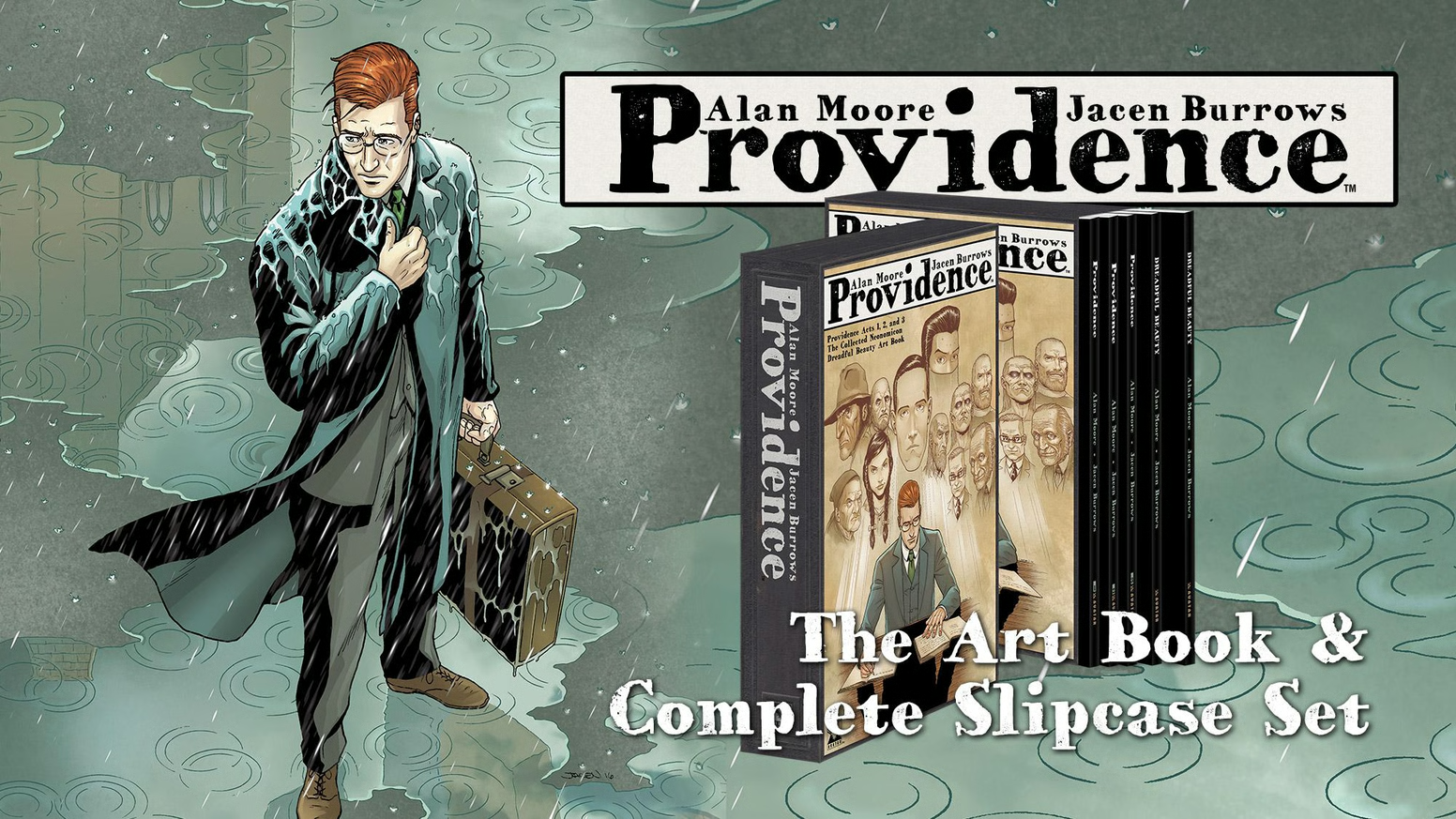
The horror of Providence begins entrenched in the screwed reality 1919 existence when aspiring novelist and closeted reporter Robert Black, a secretive Jew living and working in New York, is sent out to write an entertaining story on the existence of a book that is said to drive its readers insane.
During his travels and investigations throughout “Lovecraft Country” in the northeastern United States, Black comes into contact with strange, cult-like folk and horrific practices and experiences, unlike any that readers may have previously encountered. Providence is more than just a retread of Lovecraft’s ideas and tropes. It’s something altogether new and harrowing.
One need not be familiar with Lovecraft stories to enjoy – or be curdled – by the Providence narrative. Still, with some familiarity with that author’s original stories, the comic book series provides a wealth of nods, ties, plot points, characters, underlying motives, understandings and great appreciation for both the original works and the subsequent offering from Moore and Burrows.
Meticulously researched, Providence has its own inventive and compelling story, but nearly every environment, every scene and every character in the twelve-part tale points to a Lovecraft publication. Still, it’s not beholden to the pulp writer. It’s both a loving homage and a significant new contribution to the cosmic horror genre. Here, creators Moore and Burrows, writer and artist, express to readers things that even Lovecraft would not or could not dare to represent in his own writings. On multiple narrative levels, Providence is as much a study of the complex man (who makes an important appearance in the series) as it is a scholarly treatise of his stories. It is an examination of American twentieth-century bigotry and shifting values and a gripping horror-mystery that unfolds slowly through each issue, revealing an evocatively diabolic and maddening tapestry by series’ end.

Over the last ten years, Providence has been studied, chided, acclaimed, ridiculed and celebrated as one of the greatest embodiments and contributions to the horror genre, in any artistic medium. You can find PhD-level blogs across the internet dedicated to deep readings, constructive comparisons, interpretations and analyses of the series. More lightly, but no less emotionally, this particular website has praised it on more than one occasion, even going so far as to exclaim that the Jacen Burrows-illustrated cover of its first issue is one of the most terrifying comic book covers ever published.
High praise indeed.
Providence is certainly not for the squeamish. It contains imagery and situations that will absolutely disgust. I have, myself, multiple collections of the publication and none of them are kept here at my family home, where inquisitive and naïve children could ever mistakenly access them.
But for those that are brave and unquestionably willful enough to dive deep within Lovecraft’s cosmic creations and mankind’s ensured end, Moore and Burrows have created an extremely important contribution to lore, art, the horror genre and the comic book art form.
Ten years on, if you read Providence, you won’t put it down untouched by its terrors or, perhaps more impotently, marvel at its rich and deftly considered storytelling.
Happy tenth anniversary, Providence. May its horrors continue to enthrall until – and long after – Cthulhu and the coming end times.
