

The Dark Ages
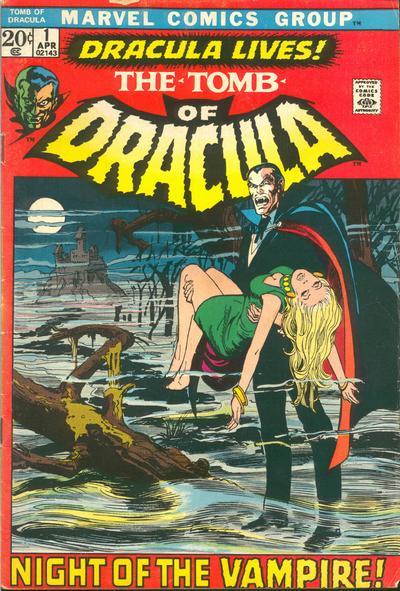
In an age of comics that includes the aforementioned Walking Dead, Locke & Key and even the ultimate in today’s horror, Crossed, it’s hard to believe that it was at one time impossible to see horror and even monsters in comics. But from 1954 to roughly the turn of the century the majority of comics on the shelves were governed by the Comics Code Authority.
Testing the Waters
Marvel Comics jumped right on board, first going high profile introducing Morbius the Living Vampire in Amazing Spider-Man #101, before launching their own versions of the monsters. These included Werewolf by Night, the Frankenstein Monster, the Living Mummy, new creations the Manphibian, Satana, the Son of Satan, and the Man-Thing, and of course, Count Dracula.
Notably Simon Garth the Zombie, and Brother Voodoo came a little later, as zombies and voodoo had no literature basis to bypass the code. Marvel instead used the euphemism zuvembie, which Avengers readers may remember as the way Wonder Man was eventually brought back to life. Zuvembie, heh, they weren’t very sharp over at the CCA, were they? Eventually the reins were loosened for zombies as well.
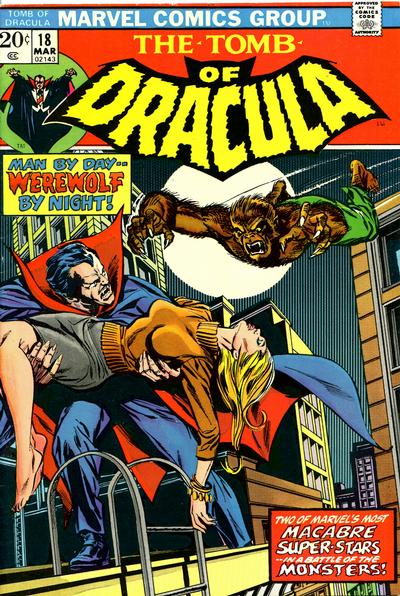
The stage was set, and Dracula was flying high, not just in Tomb but also Dracula Lives and random appearances in other new Marvel comics that appeared in the early 1970s flood of the horror genre. With the Code loosened, horror was back in a big way.
Dracula Gets His Groove
With Marv Wolfman and Gene Colan in the driver’s seat, The Tomb of Dracula soared. A cast of characters grew from the original source material, like Quincy Harker, son of Jonathan and Mina, and Rachel van Helsing, granddaughter of the original vampire hunter. There was also Frank Drake, a descendant of Dracula himself, Hannibal King the vampire detective, and writer Harold H. Harold. And then there was Blade, who almost everyone knows from his depiction by Wesley Snipes in three feature films.
Besides a supporting cast (supporting the series more than the title villainous character, mind you), Count Dracula had quite a number of just as evil, if not more so, adversaries. Among them, his son Janus and daughter Lilith, Domini, Doctor Sun, Deacon Frost, who also appeared in the first Blade film, and even Satan himself. One opponent, Varnae, was not only adapted from the classic Gothic tale, “Varney the Vampire,” which predated Bram Stoker’s Dracula, but also in the Marvel Universe fought Conan the Barbarian at one time.
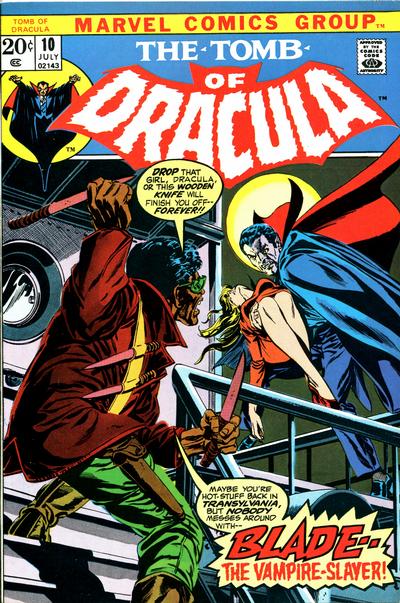
The Tomb of Dracula ran for several years with the same terrific creative team of Wolfman and Colan, giving the monster a depth and personality beyond that of just an evil creature of the night. They had created not only “Comicdom’s Number One Fear Magazine” as it was called back in the day, but quite probably one of the best series of the 1970s – quite a feat for a comic book that featured a non-spandexed villain.
After the Series
Sadly, The Tomb of Dracula ended with issue #70 in 1979. In the pages of Doctor Strange, an intriguing plot device called the Montesi Formula destroyed all vampires on Earth for some time, including Count Dracula. But as we’ve 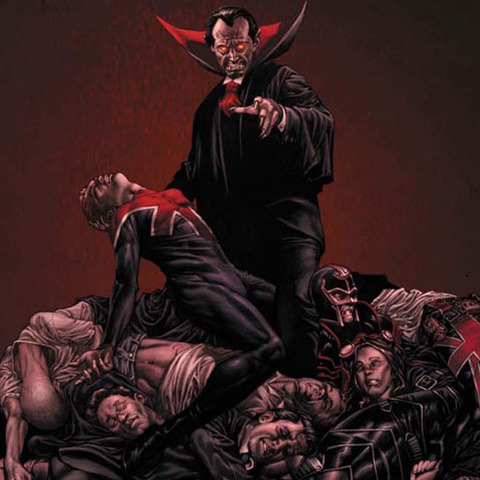
The vampire king is killed and brought back more than a few times. More entrenched in the Marvel Universe than ever, it is the X-Men who bring Drak back the next time, seeking an ally against the vampire’s own villainous son, Xarus. Collaboration is denied, and Dracula and the X-Men in the end part ways in a stalemate after Xarus is dispatched. At one point Marvel even tries to revive the Tomb of Dracula title itself, to little success.
Legacy
Dracula is a solid Marvel Comics character, so much so that he has a distinction not many Marvel heroes do. Recently here at Biff Bam Pop!, my buddy JP Fallavolitta wrote about Wolverine’s foray into anime, and while Japan has also done the X-Men, Iron Man, and Blade as well, none of them were the first to make it to anime – Dracula was, back in 1980. Here’s a clip…

Count Dracula remains ‘alive’ and part of the Marvel Universe, most recently encountering the transformed Hulk in the “Fear Itself” crossover. Nothing however can match the phenomenal run of Wolfman and Colan on the original Tomb of Dracula. If you get the chance, seek it out and check it out – it’s at the top of the coffin as far as horror comics and classic monsters go.